
florida food truck requirements pdf
Florida Food Truck Requirements: A Comprehensive Guide (2026)
Navigating Florida’s food truck scene demands meticulous planning and adherence to diverse regulations, encompassing licenses, vehicle standards, and stringent food safety protocols for success.
I. Initial Considerations & Business Planning
Embarking on a Florida food truck venture necessitates thorough initial planning. First, clearly defining your concept – cuisine, target audience, and unique selling points – is crucial. Subsequently, a robust business plan is paramount, detailing financial projections, marketing strategies, and operational logistics.
Consider your legal structure (sole proprietorship, LLC, etc.) and complete the necessary registration with the state. Remember, operating a food truck classifies your vehicle as commercial, triggering specific legal obligations.
Thoroughly research potential locations, understanding that location-specific regulations vary significantly by city and county. Early engagement with local authorities can prevent future complications. Furthermore, anticipate the need for event-based licensing for operations lasting 30 days or less, as commonly required for temporary food service events throughout Florida.
A. Defining Your Food Truck Concept
The cornerstone of a successful Florida food truck lies in a well-defined concept. This extends beyond simply choosing a cuisine; it involves identifying a niche market and crafting a unique brand identity. Consider your target demographic – are you aiming for the lunch crowd, event attendees, or late-night diners?
Specialization is key. Will you offer gourmet tacos, artisanal sandwiches, or specialized desserts? A focused menu streamlines operations and builds a loyal following.
Furthermore, contemplate the logistical implications of your chosen menu. Does it require extensive on-board preparation, or can ingredients be prepped at an approved food service establishment? Remember, all food storage and preparation must adhere to strict standards, and your truck’s ventilation must meet regulatory requirements, necessitating a fire department inspection.
B. Developing a Business Plan
A robust business plan is paramount for securing funding and ensuring long-term viability. This document should detail your food truck concept, target market, and competitive analysis. Crucially, it must outline projected startup costs – including the vehicle itself, equipment, licenses, and initial inventory.
Financial projections are essential, encompassing revenue forecasts, expense budgets, and profitability analysis. Don’t forget to factor in sales tax registration with the Department of Revenue, enabling you to legally charge and remit taxes.
Your plan should also address operational logistics, including sourcing ingredients from approved food service establishments, scheduling, and marketing strategies. Consider the event-based nature of many Florida food truck operations, planning for Temporary Food Service Event Licenses for events lasting 30 days or less. A well-crafted plan demonstrates preparedness to potential investors and regulatory bodies.
C. Legal Structure & Registration
Choosing the correct legal structure – sole proprietorship, partnership, LLC, or corporation – is a foundational step. Each option carries different liability and tax implications, so consult with legal and financial professionals. Once decided, register your business name with the Florida Division of Corporations.
Obtain an Employer Identification Number (EIN) from the IRS, even if you don’t plan to hire employees initially. This is crucial for banking and tax purposes. Remember, operating a food truck classifies your vehicle as commercial, necessitating specific legal responsibilities.
Beyond business registration, you’ll need to comply with state and local regulations regarding food service. This includes securing the necessary licenses and permits, detailed in subsequent sections, and ensuring your operations meet all food safety and handling regulations. Proper registration establishes a legal foundation for your mobile food venture.

II. Essential Licenses & Permits
Florida food truck operators require licenses from the DBPR, a food service establishment license, and potentially a temporary event license, plus sales tax registration.
A. Florida Department of Business and Professional Regulation (DBPR)
The Florida Department of Business and Professional Regulation (DBPR) plays a central role in regulating food service operations, including mobile food dispensing vehicles – commonly known as food trucks. Obtaining the necessary licenses through the DBPR is a foundational step for legal operation within the state.
Specifically, you’ll need to apply for and receive a Food Service Establishment License. This license confirms that your food truck meets the state’s standards for safe food handling and preparation. The DBPR website (MyFloridaLicense.com) provides detailed information on the application process, required documentation, and associated fees.
Once licensed, operators are legally obligated to consistently meet and maintain all applicable standards of a public food service establishment, as defined by Florida’s rules, codes, and statutes. Regular inspections may be conducted to ensure ongoing compliance with these regulations, covering aspects like food storage, preparation, and sanitation. Failure to adhere to these standards can result in penalties, including license suspension or revocation.
B. Food Service Establishment License
Securing a Food Service Establishment License from the Florida DBPR is paramount for operating a food truck legally within the state. This license signifies your vehicle’s adherence to stringent public health and safety standards concerning food preparation and service. The application process requires detailed information about your food truck’s operations, menu, and proposed locations.
Applicants must demonstrate a thorough understanding of food safety principles and possess a designated food manager who has completed an accredited food safety training program. The DBPR assesses your food truck’s ability to maintain safe food temperatures, prevent cross-contamination, and ensure proper sanitation practices.
This license isn’t a one-time approval; ongoing compliance is crucial. Expect routine inspections to verify continued adherence to established regulations. Maintaining a valid Food Service Establishment License is non-negotiable for any food truck aiming to operate lawfully and protect public health in Florida.
C. Temporary Food Service Event License

For food trucks operating at events lasting 30 days or less in Florida, a Temporary Food Service Event License is essential. This license, also issued by the DBPR, allows for the preparation, service, and sale of food to the public during specified events. It’s distinct from the standard Food Service Establishment License, catering specifically to short-term operations.
Hallandale Beach’s guidelines emphasize the need to follow a Temporary Food Service Checklist, detailing all requirements for safe event food service. This checklist covers aspects like handwashing facilities, proper food storage temperatures, and waste disposal methods. Obtaining this license involves submitting an application and potentially undergoing a pre-event inspection.
Remember, certain exceptions may apply, but generally, any public event involving food sales necessitates this temporary permit. Compliance ensures public safety and avoids potential penalties, making it a vital step for event-based food truck businesses.
D. Sales Tax Registration (Department of Revenue)
Operating a food truck in Florida necessitates registering with the Florida Department of Revenue to collect and remit sales tax. This registration establishes your ability to legally charge sales tax on all taxable goods sold, ensuring compliance with state tax regulations. It’s a crucial step in establishing a legitimate and financially responsible business.
This process involves obtaining a sales tax certificate, allowing you to accurately calculate, collect, and report sales tax revenue. Staying current with tax regulations is paramount, as failure to comply can result in penalties and legal issues. Proper record-keeping of all sales transactions is also essential for accurate tax reporting.
Successfully managing sales tax obligations demonstrates professionalism and contributes to the state’s revenue, solidifying your food truck’s standing within the Florida business community.

III. Vehicle Requirements & Inspections
Florida classifies food trucks as commercial vehicles, demanding adherence to specific legal responsibilities, including fire safety inspections and ensuring proper ventilation systems are installed.
A. Commercial Vehicle Classification
In Florida, operating a food truck immediately classifies your vehicle as a commercial entity, triggering a distinct set of legal obligations beyond standard passenger vehicle requirements. This classification impacts several areas, including registration, insurance, and routine safety inspections. You must ensure your vehicle meets the state’s commercial vehicle standards, which may differ based on the truck’s weight and operational characteristics.
Proper vehicle classification is crucial for legal operation and avoiding potential fines or penalties. It’s essential to verify with the Florida Department of Highway Safety and Motor Vehicles (FLHSMV) the specific requirements applicable to your food truck’s configuration. This includes appropriate registration, displaying the correct decals, and maintaining updated documentation. Failing to adhere to these regulations can lead to operational disruptions and legal complications, so proactive compliance is paramount for a successful food truck venture.
B. Fire Department Inspection & Ventilation
A critical component of Florida food truck compliance involves a thorough inspection by the local fire department. This assessment ensures your truck’s ventilation system meets stringent regulatory standards designed to prevent fires and maintain safe cooking conditions. Contacting your local fire department directly is essential to schedule this inspection and obtain their specific checklist, allowing you to prepare adequately.
The fire department will scrutinize your ventilation hood, suppression systems, and propane storage (if applicable) to confirm they adhere to safety codes. Proper ventilation is paramount, as it removes grease-laden vapors and combustion byproducts, mitigating fire hazards. Be prepared to demonstrate the functionality of all fire safety equipment during the inspection. Addressing any deficiencies identified promptly is crucial for passing the inspection and obtaining the necessary approvals to operate legally and safely.
C. Vehicle Safety Standards
Operating a food truck in Florida necessitates classifying your vehicle as commercial, triggering specific legal responsibilities regarding safety. This classification demands adherence to all applicable vehicle safety standards, mirroring those required for other commercial vehicles operating within the state. Regular vehicle maintenance and inspections are crucial to ensure optimal functionality and prevent potential hazards.
These standards encompass proper lighting, braking systems, tire conditions, and overall vehicle integrity. Documentation proving compliance with these standards may be required during inspections. Maintaining a detailed maintenance log is highly recommended. Prioritizing vehicle safety isn’t just about legal compliance; it’s about protecting yourself, your employees, and the public. A well-maintained vehicle minimizes the risk of accidents and ensures a smooth, reliable operation, contributing to a positive customer experience.
IV. Food Safety & Handling Regulations
Florida mandates food storage and preparation within an approved, licensed establishment; operators must consistently meet public food service standards, rules, and statutes.
A. Approved Food Service Establishment for Prep
Florida regulations strictly require all food storage and preparation operations for your food truck to occur within a permitted, licensed, and approved food service establishment. This means you cannot legally prepare food directly within the confines of the food truck itself, beyond final assembly and cooking.
The approved establishment must meet all state and local health codes, ensuring proper sanitation, temperature control, and food handling practices. This could be a commercial kitchen you rent, a restaurant during off-peak hours (with proper agreements), or a dedicated commissary designed for food truck operations.
Maintaining documentation proving this arrangement is crucial during inspections. The Department of Business and Professional Regulation (DBPR) will verify that your prep location holds the necessary licenses and permits. Failure to comply with this requirement can result in fines, suspension of your license, or even closure of your food truck business. Prior planning and securing an approved prep space are fundamental to legal operation.
B. Food Storage & Preparation Standards
Maintaining impeccable food storage and preparation standards is paramount for Florida food trucks, mirroring those of traditional brick-and-mortar establishments. Temperature control is critical; all potentially hazardous foods must be held at safe temperatures – below 41°F or above 135°F – utilizing calibrated thermometers for consistent monitoring.
Proper food handling practices, including handwashing, preventing cross-contamination, and utilizing separate cutting boards for raw and cooked items, are non-negotiable. Storage containers must be food-grade, properly labeled, and stored off the floor.
Detailed records of food sourcing, preparation dates, and temperature logs are essential for inspection. Adherence to these standards isn’t merely about compliance; it’s about safeguarding public health and building customer trust. Regular staff training on food safety protocols is highly recommended to ensure consistent adherence to these vital regulations.
C. Temporary Food Service Checklist Compliance
Florida’s Department of Business and Professional Regulation (DBPR) mandates strict adherence to a Temporary Food Service Checklist for events lasting 30 days or less. This comprehensive checklist covers every facet of operation, from water source and waste disposal to food protection and employee hygiene.
Key areas include demonstrating an approved food service establishment for prep, proper handwashing facilities with hot and cold running water, and adequate food shielding to prevent contamination. Accurate temperature controls, appropriate food storage, and safe food handling practices are heavily scrutinized.
The checklist also addresses sanitation, including cleaning and sanitizing procedures for food contact surfaces. Operators must be prepared for on-site inspections to verify compliance; having a completed checklist readily available demonstrates proactive preparation and commitment to food safety standards.
V. Operational Regulations & Restrictions
Food truck operations in Florida are often event-based, requiring licenses for periods of 30 days or less, with alcohol sales facing significant limitations and local rules varying.
A. Event-Based Licensing (30 Days or Less)
For food trucks operating at events lasting 30 days or less in Florida, a Temporary Food Service Event License is generally required. This license, obtained through the Florida Department of Business and Professional Regulation (DBPR), allows vendors to legally prepare and serve food to the public during these short-term engagements. Hallandale Beach specifically highlights this requirement for events on city facilities or public property.

The application process involves submitting necessary documentation and adhering to a Temporary Food Service Checklist, ensuring compliance with food safety standards. This checklist details requirements for everything from handwashing facilities to proper food storage temperatures. It’s crucial to consult the DBPR website and local county health departments for the most up-to-date information and specific event requirements. Remember that even with this temporary license, all standards of a public food service establishment must be maintained throughout the event duration.
B. Alcohol Sales Restrictions
Securing a full liquor license for a Florida food truck proves exceptionally challenging, making alcohol sales a significant hurdle for many mobile vendors. While not entirely prohibited, the regulatory landscape heavily restricts alcohol service from food trucks, differing substantially from brick-and-mortar establishments. Typically, food trucks rely on temporary or short-term licenses for specific events, but these rarely encompass alcohol sales permissions.
Around Palm Beach and throughout the state, food truck business plans generally avoid incorporating alcohol due to these licensing difficulties. Obtaining the necessary permits involves navigating complex state and local regulations, often requiring substantial investment and legal expertise. Vendors should anticipate limited options and potential prohibitions, focusing instead on non-alcoholic beverage offerings. Thoroughly researching local ordinances is vital, as restrictions can vary by city and county, impacting operational feasibility.
C. Location-Specific Regulations (City/County)
Florida’s food truck regulations exhibit considerable variation at the city and county levels, demanding diligent research before establishing operations in any specific locale. Beyond statewide requirements, individual municipalities often impose unique restrictions concerning permitted operating locations, hours of service, and proximity to existing restaurants. Hallandale Beach, for example, has specific requirements for food trucks operating on city facilities or public property, including insurance stipulations.
Operators must proactively investigate local zoning ordinances and permitting processes to ensure full compliance. These regulations can dictate parking restrictions, noise level limitations, and waste disposal protocols. Obtaining necessary permissions from the local government is crucial, potentially involving site plan submissions and community approval processes. Ignoring these location-specific rules can result in fines, operational shutdowns, or even legal repercussions, emphasizing the importance of localized due diligence.
VI. Insurance Requirements
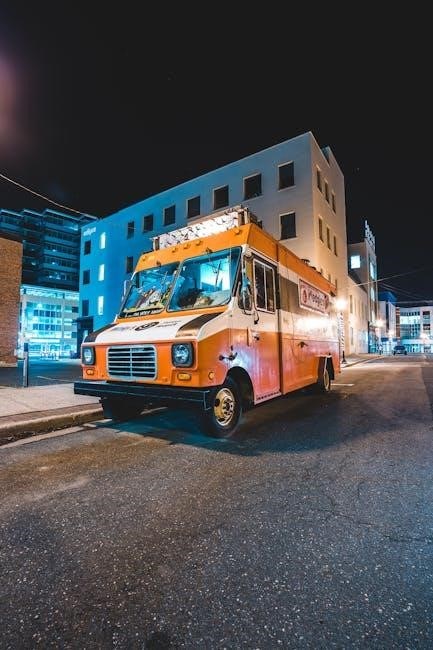
Food trucks necessitate comprehensive insurance coverage, including general liability, vehicle insurance, and potentially workers’ compensation, safeguarding against potential risks and liabilities.
A. Food Truck Insurance (General Liability)
General liability insurance is paramount for Florida food trucks, protecting your business from a wide array of potential claims. This coverage typically includes bodily injury, property damage, personal and advertising injury, and medical payments. Accidents happen – a customer could slip and fall, or your truck might inadvertently damage property during an event.
Without adequate general liability insurance, you’re personally liable for these costs, which can be financially devastating. Policies should cover incidents occurring both on and off event premises. Consider coverage limits carefully; higher limits offer greater protection. Many event organizers require proof of general liability insurance before allowing a food truck to participate.
Premiums vary based on factors like your truck’s size, location, and the types of food you serve. Obtaining quotes from multiple insurers is crucial to securing the best rate. Don’t overlook the importance of reviewing policy exclusions to understand what isn’t covered, ensuring comprehensive protection for your mobile food business.
B. Workers’ Compensation Insurance (If Applicable)
Florida law mandates workers’ compensation insurance for most employers, including food truck operators, if they have four or more employees – including yourself if you are operating as a corporation. This insurance provides benefits to employees who suffer job-related injuries or illnesses, covering medical expenses, lost wages, and rehabilitation costs.
Even with fewer than four employees, obtaining workers’ compensation can be beneficial, protecting you from lawsuits related to employee injuries. Failure to comply with Florida’s workers’ compensation laws can result in significant penalties. The specific requirements and coverage levels depend on the nature of your business and the risks involved.
Consulting with an insurance professional specializing in workers’ compensation is highly recommended to ensure you meet all legal obligations and provide adequate protection for your workforce. Proper classification of employee roles is vital for accurate premium calculations and appropriate coverage.
C. Vehicle Insurance
Operating a food truck in Florida necessitates comprehensive vehicle insurance, extending beyond standard personal auto policies. As your food truck is classified as a commercial vehicle, you’ll require a commercial auto insurance policy tailored to the specific risks associated with mobile food vending. This coverage should include liability protection, covering bodily injury and property damage caused to others.
Furthermore, consider physical damage coverage – collision and comprehensive – to protect your investment against accidents, theft, and vandalism. Policies can be customized with endorsements for equipment breakdown, product liability, and even business interruption. It’s crucial to disclose the vehicle’s use as a food truck to your insurer to ensure adequate coverage.
Regularly review your policy limits and coverage options to adapt to changing business needs and potential risks. Maintaining sufficient vehicle insurance is not only legally required but also safeguards your livelihood.










Leave a Comment